Aphrodite’s Giant (Cyprus Cat)
Aphrodite’s Giant: A Large Natural Cat Breed from Cyprus
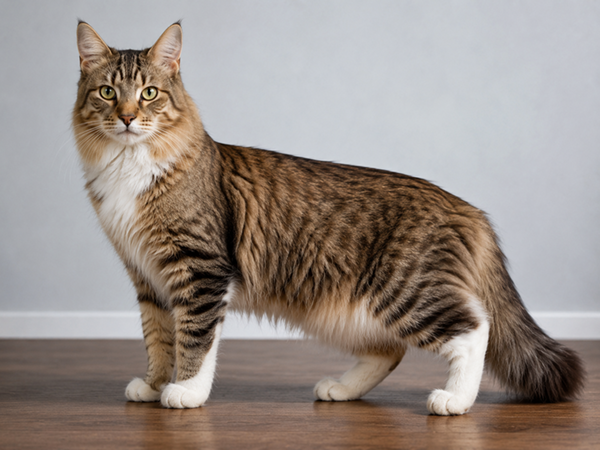
The Aphrodite is a large, strong and elegant cat breed developed from the naturally occurring cat population of Cyprus. It has a long, muscular body, substantial bone structure, hind legs that are slightly longer than the front legs and a distinctive triangular head with a broad, square muzzle. The World Cat Federation uses the official name Aphrodite’s Giant, while The International Cat Association uses the shorter name Aphrodite.
Despite its impressive build, the Aphrodite should not look heavy, clumsy or compact. This is an athletic and agile cat whose appearance combines physical strength with balanced proportions. The word Giant refers to the breed’s large physical type, but neither WCF nor TICA sets an official weight requirement.
Breed at a glance:
- International name: Aphrodite’s Giant
- Alternative name: Aphrodite
- Coat length: shorthaired and semi-longhaired
- Country of origin: Cyprus
- WCF codes: APL for the semi-longhaired variety, APS for the shorthaired variety
- WCF categories: 2 – Semi-Longhair (APL), 3 – Shorthair (APS)
- Size: large
- Weight: no official range is established; males are usually considerably larger than females
- Life expectancy: reliable breed-specific data are not yet available
- Activity level: moderately high, athletic and active
- Sociability: well-socialized cats can be comfortable and confident around people
- Affection level: TICA describes a gentle temperament; attachment and sociability vary among individuals
- Distinctive features: natural Cypriot origin, pronounced size difference between males and females, hind legs slightly longer than the front legs, two coat varieties and slow maturation according to the TICA standard
How the Aphrodite Differs from Other Cats of Cyprus
The terms Cyprus cat and Aphrodite are not interchangeable. Cyprus is home to a large and diverse population of domestic, free-roaming and feral cats that vary in size, coat length, color, body type and ancestry. A cat is not automatically an Aphrodite simply because it was born on the island.
The Aphrodite is a standardized pedigree breed developed through the selection of Cypriot cats with a particular physical type. A pedigreed Aphrodite should have documented ancestry and conform to the standard used by the relevant cat registry. For this reason, not every large or longhaired cat from Cyprus belongs to the breed, and pedigree status cannot be confirmed from appearance or a photograph alone.
The Ancient Cats of Cyprus
Cyprus holds an important place in the early history of the relationship between humans and cats. At the Neolithic settlement of Shillourokambos in southern Cyprus, archaeologists discovered a cat skeleton in a small grave beside a human burial dating back approximately 9,500 years. The position of the remains and the absence of signs that the animal had been butchered led researchers to suggest that the cat may have held special meaning for the person or community involved.
Cats were not part of the original native fauna of Cyprus, so people must have transported them to the island by sea. This suggests that they were already considered useful or significant. The Shillourokambos burial is one of the earliest known signs of a close relationship between humans and cats and predates the familiar artistic representations of domestic cats in ancient Egypt by several thousand years.
The discovery does not establish a direct pedigree connecting the ancient cat with the modern Aphrodite breed. Thousands of years separate the burial from present-day breeding programs, and cats may have been brought to Cyprus from other regions many times during that period.
Development of the Modern Aphrodite Breed
For a long period, cats on Cyprus existed as a naturally breeding island population. They lived around settlements and farms and were also found in mountainous areas. The TICA standard associates the breed type with cats from the mountain regions of Cyprus, while the modern pedigree breed was formed through the deliberate selection of animals with a particular combination of physical traits.
WCF recognizes two coat varieties under separate breed codes:
- APL – Aphrodite’s Giant, the semi-longhaired variety;
- APS – Aphrodite’s Giant Shorthair, the shorthaired variety.
The semi-longhaired variety belongs to WCF Category 2 – Semi-Longhair, while the shorthaired variety belongs to Category 3 – Shorthair. In TICA, the two varieties form the Aphrodite Breed Group and are known as the Aphrodite Longhair and Aphrodite Shorthair.
In January 2024, TICA returned the Aphrodite from Preliminary New Breed status to Registration Only. Aphrodites may therefore be registered with TICA, but they are not currently eligible to compete as a championship breed within the organization.
How the Aphrodite Got Its Name
The name Aphrodite’s Giant reflects the breed’s connection with Cyprus and the island’s long association with the Greek goddess Aphrodite. According to Greek mythology, Aphrodite rose from the sea foam near the coast of Cyprus, and her name remains closely linked with the island’s culture and landmarks.
The word Giant emphasizes the breed’s large and powerful build. It does not mean that every Aphrodite reaches an extraordinary weight. The standards do not set an official weight range, and adult females are usually smaller and lighter than males.
Appearance of the Aphrodite Cat
The Aphrodite is a large, substantial cat with strong bone and well-developed muscles. Its build should suggest strength and excellent physical condition while remaining elegant. The body is long and solid rather than short or rounded, with a relatively long back and neck. The shoulders and hips are muscular and approximately equal in width, giving the cat an elongated, athletic outline.
Sexual dimorphism is pronounced. Adult males are generally larger and more muscular than females, and mature males may develop noticeable jowls. TICA describes the Aphrodite as slow to mature, so kittens and young adults may have less developed muscle, coat and overall substance than fully mature cats.
Legs and Paws
The legs are strong and muscular, with medium to large bone. The hind legs are slightly longer than the front legs, a characteristic included in both the WCF and TICA standards. This structure contributes to the breed’s athletic appearance and ability to jump and climb. Indoor Aphrodites benefit from tall cat trees, securely mounted shelves and stable elevated resting places designed to support a large, powerful cat.
Head and Muzzle
Viewed from the front, the head forms a long triangle, with relatively straight cheek lines widening from the muzzle toward the ears. The muzzle is broad, slightly longer than it is wide and square in outline. It should appear strong and well developed rather than narrow, pointed or excessively short. The chin is full and firm and aligns with the nose.
In profile, the line between the nose and brow forms a gentle concave curve, while the forehead is slightly rounded without an abrupt break. The overall head should combine natural strength with balanced proportions rather than appearing either excessively delicate or coarse.
Ears
The ears are medium to large and broad at the base. Viewed from the front, their placement creates an open V shape, with a softly rounded line between them at the top of the head. Small ears, narrow ear bases or ears placed very close together and pointing straight upward do not represent the preferred type. Semi-longhaired Aphrodites may have longer furnishings inside the ears, but prominent lynx tips are not required.
Eyes
The eyes are olive-shaped, falling between round and oval, and are set at a slight angle. The outer corner of each eye points toward the central area of the ear base, giving the face an alert expression. Eye color is not strictly linked to coat color, and shades may include blue, green, yellow and gold. The color should appear clear and even.
Tail
The tail is medium to long and proportionate to the body. It is thick where it joins the body and gradually tapers toward the tip. The semi-longhaired variety has a full, well-plumed tail, while the coat on the tail of the shorthaired variety is approximately the same length as the coat on the body.
Semi-Longhaired Aphrodite
The semi-longhaired Aphrodite carries the WCF code APL. Its coat is soft, silky and dense, with slightly longer hair around the neck, on the belly and over the hindquarters, where it may form a modest ruff and britches. The tail is full and well plumed. Coat length and undercoat density vary with the seasons, so the winter coat may be considerably fuller than the summer coat.
Shorthaired Aphrodite
The shorthaired Aphrodite carries the WCF code APS. Its coat is soft, dense and semi-plush rather than extremely short or flat. The undercoat may become fuller during colder months and less noticeable in summer. The texture should remain soft and silky rather than coarse or harsh.
Colors and Patterns
WCF and TICA describe the permitted colors differently. TICA lists the Aphrodite in all divisions and accepts all colors under its breed-group standard. WCF permits a wide range of solid, tortoiseshell, tabby, spotted, silver, smoke and bicolor coats but excludes pointed and mink patterns.
Under the WCF standard, a solid-colored cat should not have white markings, while the white and colored areas of a bicolor may be distributed asymmetrically. Color is not the defining feature of the Aphrodite. Body structure, musculature, head shape, coat quality and overall condition carry greater importance in breed evaluation.
Aphrodite Cat Personality
The TICA standard describes the ideal Aphrodite as combining physical strength and power with a gentle temperament. However, the Aphrodite remains a rare breed, and there is limited independent evidence supporting broad claims about the exact level of sociability, affection or independence shared by all members of the breed.
An individual cat’s behavior depends on genetics, early socialization, handling, living conditions and previous experience. A well-socialized Aphrodite can become a calm and affectionate companion, but the desire for constant attention, physical contact or being carried will vary from cat to cat.
Activity and Play
The Aphrodite has a strong, athletic body and benefits from regular physical activity. Tall cat trees, wall-mounted shelves, tunnels, scratching posts and secure climbing routes provide appropriate outlets for movement and exploration. Wand toys, balls, food puzzles and toys that imitate small prey can be used for daily play and mental stimulation.
Regular activity is particularly important for an indoor cat. Too little exercise can contribute to weight gain, frustration and unwanted behavior.
Living with Children and Other Pets
A calm, well-socialized Aphrodite may live successfully with respectful children. Children should be taught not to chase, restrain or pull the cat’s tail and to leave the cat alone while it is sleeping, eating or using the litter box.
Introductions to other cats or cat-friendly dogs should be gradual, with separate food bowls, resting places and opportunities for each animal to withdraw. Like other domestic cats, an Aphrodite may have a hunting instinct, so birds, rodents, fish and other small pets should be kept in secure enclosures.
Is the Aphrodite Cat Right for You?
The Aphrodite may suit someone who appreciates a large, natural-looking cat with an athletic build and a moderately high activity level. A prospective owner should be prepared to:
- provide enough room for a large cat;
- install sturdy climbing and scratching furniture;
- offer interactive play every day;
- groom the coat more frequently during seasonal shedding;
- monitor the cat’s weight and body condition;
- secure windows and balconies;
- respect the individual cat’s temperament and preferences.
The breed may not suit someone looking for a very small or sedentary pet or anyone unable to accommodate the size and activity of a powerful adult cat.
Grooming
A shorthaired Aphrodite usually needs brushing about once a week with a soft brush or grooming glove. The semi-longhaired variety may need brushing once or twice a week, with particular attention to the underarms, belly, neck and fur around the hind legs. More frequent grooming may be necessary during seasonal shedding to remove loose undercoat and prevent tangles.
Regular bathing is usually unnecessary. The nails should be checked and trimmed as needed, and routine care should also include inspection of the ears and attention to dental health.
Home Safety and Outdoor Access
Windows and balconies should be fitted with strong pet-safe screens because a standard insect screen may not withstand the weight or force of a large cat. Unsupervised outdoor access exposes cats to traffic, infectious disease, poisoning, theft and attacks by other animals.
Safer alternatives include a secure cat enclosure, an enclosed garden, a protected balcony or supervised walks in a properly fitted harness. Harness training should begin gradually indoors before the cat is taken outside.
Feeding an Aphrodite Cat
The Aphrodite needs a complete and balanced diet appropriate for its age, activity level and health. A large frame does not mean that the cat should be fed without limits, since excess body fat places additional strain on the joints, spine, heart and other organs.
Portion size should be adjusted according to the body condition of the individual cat rather than breed size alone. The ribs should be easy to feel beneath a light layer of tissue, and a visible waist should remain when the cat is viewed from above. Fresh drinking water should always be available.
Aphrodite Cat Health
The Aphrodite remains a rare breed, and large scientific studies establishing the prevalence of breed-specific inherited diseases are not yet available. It would therefore be inaccurate either to declare the breed free from hereditary problems or to assign it a list of disorders without reliable evidence.
The health of a kitten depends on its bloodline, genetic diversity, breeding practices, early care and living conditions. A responsible breeder should consider health problems found among parents and other relatives and select screening tests based on the documented history of the particular bloodline.
Before buying an Aphrodite kitten, ask the breeder for:
- the pedigrees of both parents;
- the results of any genetic tests performed;
- information about veterinary screening of breeding cats;
- the kitten’s veterinary and vaccination records;
- details of parasite prevention;
- a written sales contract and health guarantee.
There is no single universal panel of tests that applies to every Aphrodite bloodline. Screening decisions should be based on documented family history and veterinary advice. Like all cats, an Aphrodite needs regular veterinary examinations, vaccination, parasite control, dental care and weight monitoring.
Interesting Facts About the Aphrodite Cat
- The breed has two WCF codes. The semi-longhaired variety is APL and belongs to Category 2 – Semi-Longhair, while the shorthaired variety is APS and belongs to Category 3 – Shorthair.
- Body structure carries considerable weight in both standards. WCF assigns 35 points to the body, while TICA assigns 40 points to the body, legs and tail.
- TICA permits no outcrosses. The Aphrodite breed-group standard lists permissible outcrosses as “None.”
- The color rules differ between registries. TICA accepts all colors, while WCF excludes pointed and mink patterns.
- The breed’s status depends on the registry. Aphrodite varieties appear in the WCF breed system, while TICA returned the breed to Registration Only status in January 2024.
The Aphrodite’s Giant is a rare Cypriot breed distinguished by its large athletic body, strong bone, triangular head and shorthaired and semi-longhaired varieties. Anyone considering an Aphrodite kitten should focus on documented ancestry, parental health, responsible breeding and correct physical type rather than size alone.
What would you like to see added to meow-cats.com?
- Funny cat videos (20%, 118 Votes)
- Ask a vet online (15%, 87 Votes)
- Classifieds for buying and selling cats (13%, 79 Votes)
- More useful articles on feline topics (13%, 76 Votes)
- Online cat memorial (11%, 63 Votes)
- Forum for cat lovers (8%, 49 Votes)
- Breeder and cattery ads (8%, 48 Votes)
- Veterinary clinic ads (7%, 41 Votes)
- Cat boarding and boarding cattery ads (6%, 38 Votes)
Total Voters: 273
 Loading ...
What are your 3 favorite cat breeds?
- Siamese Cat (11%, 184 Votes)
- Maine Coon (7%, 116 Votes)
- Bengal Cat (7%, 111 Votes)
- American Shorthair (6%, 104 Votes)
- Ragdoll (5%, 81 Votes)
- Persian Cat (5%, 79 Votes)
- Russian Blue (4%, 74 Votes)
- Egyptian Mau (4%, 68 Votes)
- Munchkin (4%, 61 Votes)
- Scottish Fold (4%, 61 Votes)
- Abyssynian (4%, 58 Votes)
- Other... (3%, 56 Votes)
- Norwegian Forest Cat (3%, 55 Votes)
- Turkish Angora (3%, 55 Votes)
- Siberian Cat (3%, 55 Votes)
- Himalayan Cat (3%, 53 Votes)
- British Shorthair (3%, 48 Votes)
- A Breedless Cat (2%, 40 Votes)
- Ocicat (2%, 40 Votes)
- Savannah Cat (2%, 39 Votes)
- Sphynx (2%, 38 Votes)
- Birman Cat (2%, 28 Votes)
- American Bobtail (2%, 25 Votes)
- Bombay Cat (1%, 23 Votes)
- Burmese Cat (1%, 21 Votes)
- Manx Cat (1%, 17 Votes)
- Havana Brown (1%, 16 Votes)
- Balinese Cat (1%, 12 Votes)
- Devonshire Rex (1%, 11 Votes)
- Singapura (1%, 9 Votes)
- Cornish Rex (0%, 7 Votes)
- Thai Cat (0%, 7 Votes)
- Donskoy Cat (0%, 1 Votes)
Total Voters: 661
Loading ...