RagaMuffin Cat
RagaMuffin Cat: A Large, Affectionate Breed with a Silky Coat and Expressive Eyes
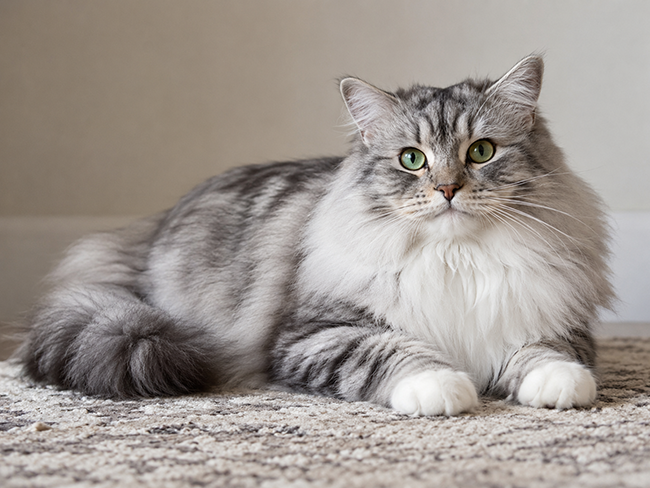 The RagaMuffin is a substantial, soft-coated companion cat known for its gentle temperament, expressive eyes, and almost teddy-bear-like appearance. Although its history is closely connected to the Ragdoll, the RagaMuffin developed into a distinct breed with its own type, a much broader range of colors and patterns, and different rules regarding eye color.
One of the breed’s most appealing features is the contrast between its powerful build and remarkably sweet expression. A mature RagaMuffin should feel solid and muscular, with heavy bone and a broad body, yet its large walnut-shaped eyes, rounded contours, and full whisker pads give the face a soft, approachable look.
Unlike the Ragdoll, the RagaMuffin is not defined by blue eyes. Depending on color and registry, the eyes may be green, gold, aqua, blue, or even two different colors. That variety is one of the details that makes this breed especially distinctive.
RagaMuffin Cat Quick Facts
- International name: RagaMuffin.
- Other names: No current official alternative name. Liebling was briefly considered during the breed’s early development but was not adopted.
- Coat length: Medium to medium-long; generally classified as semi-longhair.
- Country of origin: United States.
- WCF code: RGM.
- WCF group: Semi-Longhair.
- Size: Medium-large to large, with substantial bone and a muscular body.
- Weight: Females are commonly around 10–15 pounds; mature males may approach or exceed 20 pounds.
- Lifespan: Approximately 12–16 years.
- Activity level: Moderate.
- Social nature: Very high; strongly people-oriented and generally comfortable in family settings.
- Affection level: Very high.
- Intelligence and trainability: Good; many enjoy interactive games and can learn simple behaviors.
- Grooming: Moderate; usually one or two thorough combing sessions per week.
- Health: Generally considered a sturdy breed, but responsible breeding programs should still monitor inherited health risks.
- Price: There is no meaningful universal price range; cost varies substantially by breeder, country, pedigree, and purpose.
History of the RagaMuffin Cat
The RagaMuffin shares part of its early history with the Ragdoll. Both trace back to breeding programs developed by Ann Baker in Riverside, California, beginning with free-roaming local cats. Baker eventually established the International Ragdoll Cat Association and placed unusually strict controls on how cats from her program could be bred and registered.
By the early 1990s, some breeders wanted greater independence and the ability to register their cats with established cat associations. In 1994, a group of breeders left Baker’s organization and began developing their cats as a separate breed.
Because they could not use the Ragdoll name, the new group needed something different. Liebling was considered at an early stage, but it was not the name that ultimately survived. Curt Gehm of Liebling Cats in Virginia is credited with suggesting RagaMuffin, a playful reference to the street-cat origins of the original gene pool.
The unusual capital M in RagaMuffin was intentional. Breed history preserves a lighthearted explanation from the early breeders: these cats were big, lovable “Muffins.” The spelling became part of the breed’s identity.
The breeders did more than simply rename part of the Ragdoll population. Limited outcrossing was used to widen the gene pool and help establish a distinct breed. Domestic Longhair cats and later Persians were among the documented outcrosses used during development.
The breed achieved championship recognition with the American Cat Fanciers Association in 2001. CFA began registering RagaMuffins in 2003 and granted championship status in 2011. The GCCF granted championship status in 2015.
Is the RagaMuffin Recognized by Major Cat Registries?
The answer depends on the registry, which is a useful reminder that there is no single worldwide authority that determines whether a cat breed is “real” or recognized.
CFA recognizes the RagaMuffin for championship competition, as does the GCCF. WCF assigns the breed the code RGM and lists it among semi-longhaired cats. FIFe currently lists RGM as a non-recognized breed.
TICA takes a different approach. Under its current rules, the RagaMuffin is accepted for registration only. That means it exists within the TICA registration system but does not have championship breed status there.
What Does a RagaMuffin Look Like?
A mature RagaMuffin should look substantial without appearing exaggerated. This is a heavily boned, muscular cat with a broad chest, broad shoulders, and a rectangular body. The hindquarters should be about as broad as the shoulders, giving the body a solid, balanced outline.
The rear legs are slightly longer than the front legs. The feet are large and round, often with visible tufts of fur between the toes. The tail is long and well furnished, with the appearance of a plume or soft bottlebrush.
One unusual feature mentioned in breed standards is a soft fleshy pad on the lower abdomen. In a healthy adult RagaMuffin, this can be part of normal breed type and should not automatically be mistaken for obesity. Overall body condition still matters, of course, and a large breed should not be deliberately overfed in an attempt to create extra size.
RagaMuffins are slow to mature. Full physical development may take about four years, so young adults can look noticeably less substantial than fully mature cats.
The RagaMuffin Head and Sweet Expression
The head is broad, with rounded contours rather than sharp angles or flat planes. The muzzle is short, rounded, and relatively broad, while the cheeks are full. Puffy whisker pads are especially important because they help create the characteristic sweet expression of the breed.
The ears are medium-sized, rounded, and tilted slightly forward. They should look balanced with the head rather than unusually large, small, or sharply pointed.
The eyes are one of the breed’s most important features. They should be large, expressive, widely spaced, and walnut-shaped rather than perfectly round. Rich, intense eye color is preferred.
What Color Eyes Can a RagaMuffin Have?
RagaMuffins can have a much wider range of eye colors than many people expect. Blue eyes are possible, but they are not a universal breed requirement.
Under the CFA standard, all eye colors are allowed, including odd eyes. There are specific exceptions for certain color groups: mink cats must have aqua eyes, while sepia cats should have eyes ranging from yellow or gold through green.
Other registries use somewhat different rules. WCF, for example, associates particular eye colors with particular coat-color groups and also includes blue-eyed pointed RagaMuffins in its standard.
This is one of the easiest ways to understand why a RagaMuffin should not simply be described as “a Ragdoll in more colors.” The two breeds share ancestry, but their modern standards have developed along different paths.
RagaMuffin Coat and Colors
The RagaMuffin coat is medium to medium-long, dense, soft, and silky. It is often compared to heavily furred rabbit fur because of its plush feel. The coat becomes longer around the neck and outer edges of the face, forming a soft ruff, and it is also fuller on the hind legs.
Despite its luxurious appearance, the coat is relatively easy to maintain because its texture tends to resist severe tangling and matting. That makes the RagaMuffin considerably less demanding to groom than its abundant coat might suggest.
The breed comes in an exceptionally broad range of colors and patterns. Solid colors, tabbies, tortoiseshells, silvers, smokes, and combinations with white can all occur.
There is an important registry difference, however. CFA and GCCF do not allow the classic Siamese-style pointed pattern in championship competition, although pointed cats have had a role in breeding programs. WCF includes pointed, mink, and sepia varieties. White markings do not need to be symmetrical to be acceptable.
RagaMuffin vs. Ragdoll: What Is the Difference?
The RagaMuffin and Ragdoll are closely related historically, but they are not interchangeable names for the same cat.
The Ragdoll is strongly associated with pointed coloration and blue eyes. The RagaMuffin has a much broader color palette and, depending on the registry and coat color, may have green, gold, aqua, blue, or odd-colored eyes.
The head type is also different. RagaMuffins are expected to have broad, rounded contours, large walnut-shaped eyes, full cheeks, and particularly noticeable whisker pads that contribute to the breed’s soft expression.
Appearance alone, however, cannot prove that a cat belongs to either breed. A large, fluffy, affectionate cat with the right coloring is not automatically a RagaMuffin. Pedigree and registration records are what establish breed ancestry.
RagaMuffin Personality
If there is one trait breeders have consistently emphasized, it is temperament. RagaMuffins were developed as affectionate, easygoing companion cats, and their calm nature is considered part of proper breed type rather than an incidental bonus.
Many enjoy being close to their people and will follow family members from room to room simply to stay involved. They tend to be affectionate without needing to spend every waking moment in someone’s lap, although plenty of RagaMuffins are enthusiastic lap cats.
The breed is often described as unusually relaxed when handled. Some cats may become very loose and comfortable in a person’s arms, but this should never be treated as a test of breed identity. It also has nothing to do with reduced sensitivity to pain, an old myth sometimes associated with related breeds.
RagaMuffins can also be playful well into adulthood. Fetching toys, chasing interactive teasers, climbing cat furniture, and learning simple tricks are all well within the breed’s range of interests. CFA notes that some can even learn to wear a harness and walk on a leash.
Are RagaMuffins Good Family Cats?
For many households, yes. Their generally tolerant, people-oriented temperament makes them well suited to family life, including homes with respectful children.
That does not mean a RagaMuffin should be expected to tolerate unlimited handling. Even a famously easygoing breed needs places to sleep undisturbed and the ability to walk away when it has had enough attention.
RagaMuffins often live successfully with other cats and cat-friendly dogs as well. Introductions should still be gradual. A gentle temperament does not guarantee that two unfamiliar animals will immediately become friends.
How Much Grooming Does a RagaMuffin Need?
The impressive coat is surprisingly manageable. For most RagaMuffins, combing once or twice a week is enough to remove loose hair and prevent small tangles from becoming mats.
Areas behind the ears, under the front legs, along the belly, and around the longer fur on the hindquarters deserve extra attention. More frequent grooming may be useful during periods of heavier shedding.
Routine care should also include nail trimming, dental care, and regular checks of the ears and eyes. Because these are large cats, sturdy scratching posts, roomy litter boxes, stable cat trees, and properly sized carriers are especially useful.
RagaMuffin Health
The RagaMuffin is generally regarded as a sturdy breed, but “generally healthy” should never be interpreted as “free from inherited disease.” Individual bloodlines can still carry health risks.
Hypertrophic cardiomyopathy and polycystic kidney disease are among the conditions that have received particular attention in RagaMuffin breeding programs. Genetic screening can help breeders manage known variants where appropriate.
When choosing a kitten, documented health information is far more meaningful than a blanket claim that the breed has no health problems. A responsible breeder should be willing to discuss the health history of the lines being used, relevant testing, and the reasoning behind breeding decisions.
Feeding a RagaMuffin
RagaMuffins do not require a breed-specific diet. They need a nutritionally complete diet appropriate for their age, health, activity level, and individual needs.
Because this is naturally a large, heavy-boned breed, body weight by itself does not tell the whole story. Muscle condition, body fat, and overall proportions are more useful than trying to make a cat reach an impressive number on the scale.
Slow maturation is not an excuse for overfeeding. A young RagaMuffin should be allowed to develop gradually rather than being pushed toward adult size through excess calories.
Interesting Facts About the RagaMuffin Cat
- Liebling was almost the breed’s name. It was considered when the new breed was being established, but RagaMuffin was ultimately chosen instead.
- The capital M is intentional. Early breed history links the spelling to the affectionate idea of these cats being big, lovable “Muffins.”
- RagaMuffins mature slowly. Full physical development may take approximately four years.
- Blue eyes are not required. Depending on color and registry, RagaMuffins may have green, gold, aqua, blue, or odd-colored eyes.
- Odd eyes are allowed. CFA specifically permits heterochromia except where a particular color category requires a specific eye color.
- White markings do not need to be symmetrical. An irregular blaze, white paws, belly spots, or even a white tail tip can be perfectly acceptable.
- The soft lower-abdominal pad is part of breed type. It is mentioned in both CFA and GCCF standards.
- Temperament matters in the show ring. GCCF assigns 15 points specifically to temperament, an unusually clear indication of how important the breed’s easygoing nature is considered.
- Different registries treat the breed differently. CFA and GCCF recognize it for championship competition, while TICA currently lists the RagaMuffin as Registration Only and FIFe lists it as non-recognized.
How to Choose a RagaMuffin Kitten
Because the breed is still relatively uncommon, verifying ancestry is especially important. A large fluffy kitten with a sweet personality may resemble a RagaMuffin without actually belonging to the breed.
Ask about registration, pedigree, the health history of the parents, and any genetic or veterinary screening relevant to the breeder’s lines. A reputable breeder should be comfortable explaining why particular cats were paired and what health information is available.
Do not expect a kitten to look like a fully mature show cat. RagaMuffins develop slowly, and females are generally smaller and more lightly built than males. Adult proportions, coat, muscle, and overall substance take time to develop.
Is a RagaMuffin the Right Cat for You?
The RagaMuffin can be an excellent match for someone who wants a large, affectionate companion without the nonstop intensity of a highly active breed. These cats tend to enjoy being part of everyday household life and often form close relationships with the people around them.
They do need regular grooming, appropriately sized furniture and equipment, interactive play, and plenty of social contact. Their relaxed personality should not be mistaken for a lack of curiosity or a need for enrichment.
What makes the RagaMuffin memorable is the combination rather than any one feature: a powerful body wrapped in a soft, silky coat, large expressive eyes in an unusually broad range of colors, and a temperament deliberately shaped around companionship. The breed may share part of its history with the Ragdoll, but the modern RagaMuffin has a personality and appearance very much its own.
What would you like to see added to meow-cats.com?
- Funny cat videos (20%, 118 Votes)
- Ask a vet online (15%, 87 Votes)
- Classifieds for buying and selling cats (13%, 79 Votes)
- More useful articles on feline topics (13%, 76 Votes)
- Online cat memorial (11%, 63 Votes)
- Forum for cat lovers (8%, 49 Votes)
- Breeder and cattery ads (8%, 48 Votes)
- Veterinary clinic ads (7%, 41 Votes)
- Cat boarding and boarding cattery ads (6%, 38 Votes)
Total Voters: 273
 Loading ...
What are your 3 favorite cat breeds?
- Siamese Cat (11%, 184 Votes)
- Maine Coon (7%, 116 Votes)
- Bengal Cat (7%, 111 Votes)
- American Shorthair (6%, 104 Votes)
- Ragdoll (5%, 81 Votes)
- Persian Cat (5%, 79 Votes)
- Russian Blue (4%, 74 Votes)
- Egyptian Mau (4%, 68 Votes)
- Munchkin (4%, 61 Votes)
- Scottish Fold (4%, 61 Votes)
- Abyssynian (4%, 58 Votes)
- Other... (3%, 56 Votes)
- Norwegian Forest Cat (3%, 55 Votes)
- Turkish Angora (3%, 55 Votes)
- Siberian Cat (3%, 55 Votes)
- Himalayan Cat (3%, 53 Votes)
- British Shorthair (3%, 48 Votes)
- A Breedless Cat (2%, 40 Votes)
- Ocicat (2%, 40 Votes)
- Savannah Cat (2%, 39 Votes)
- Sphynx (2%, 38 Votes)
- Birman Cat (2%, 28 Votes)
- American Bobtail (2%, 25 Votes)
- Bombay Cat (1%, 23 Votes)
- Burmese Cat (1%, 21 Votes)
- Manx Cat (1%, 17 Votes)
- Havana Brown (1%, 16 Votes)
- Balinese Cat (1%, 12 Votes)
- Devonshire Rex (1%, 11 Votes)
- Singapura (1%, 9 Votes)
- Cornish Rex (0%, 7 Votes)
- Thai Cat (0%, 7 Votes)
- Donskoy Cat (0%, 1 Votes)
Total Voters: 661
Loading ...